
Shopify Bought the Wrong Layer

Tailwind is joining Shopify. Adam Wathan called it a big one, and he is right — just not for the reason the announcement gives. The announcement says two companies are betting on the future of styling. What happened instead is smaller and funnier: a layer of human convenience lost its reader, and the man who built it walked away with the check.
Everyone is reading this deal as a syntax story. The class names are the product, the shorthand is the product, the div soup is the product. And so on. But that thinking is wrong. The product is you: the coder working with it.
What was the coder sold? Not clarity — nobody ever pitched Tailwind as readable. It was a mental model that made it so that you would never have to decide what to call a thing again. This trade bought speed. By buying into Tailwind, you were able to ship pixel-perfect designs at the cost of a bunch of noise that got in the way of the component logic. Which like all noise, could eventually be tolerated. In the same way that most people eventually get used to being waterboarded.
But that is a trade, and the pitch only ever shows one side of it.
No one ever liked Tailwind
The standard complaint about Tailwind predates agents by a decade. Div soup. className="flex items-center justify-between px-4 py-2 mt-2 rounded-lg shadow-sm hover:bg-gray-50", and good luck to whoever has to find the bug in there. Developers have been calling that unreadable since the day it shipped.
And spare me the version where Tailwind was built for human eyes and abandoned when the humans left. The room was never comfortable. Nobody was ever sitting in it, admiring the view.
Here is the actual arrangement: Tailwind charged you in the one currency you had — your eyesight — and paid you back in co-location and speed. Style and structure in one place. The pain point was tabbing over to a stylesheet, dealing with arcane specificity rules and cascade archaeology at 2am. This was like being waterboarded, but the chair breaks down in the middle of it and the CIA cop pouring cold soda down your nose is going through a divorce.
This pain is what led to such a brute force solution as Tailwind. You take a trade like that when the alternative is worse. Which means the ledger always had a legibility bill on it, and the person covering that bill was the one typing.
"People still read code, and somebody still merges the PR."
They do, and that reading is real. Security review, incident response, the 2am question of why production broke — nobody hands that to an unread diff. But nobody has ever read a class string for comprehension. Not once, not ever.
The front-end layer was the first place reading the code died, because it was the place where reading was already worth the least. Which leaves an uncomfortable arrangement. The places where humans still read are the places where you least want reading to be the only check.
Nobody wants the 2am call to hinge on whether somebody skimmed it. You want to poke at it, so that's where we put efforts: on breaking things before the incident, and that doesn't just mean "reading code."
The dictionary stays but the tour guide gets fired
A utility class is a closed, enumerable token set mapped to a design system. That is a good shape for a machine. mt-4 is lintable. It is schema-checkable. It is unambiguous in a way semantic CSS is not, because semantic CSS drags the cascade and the specificity along with it, and cascade and specificity are actively hostile to anything reasoning locally about one component. An agent reads one component at a time. The cascade does not care.
Strip the three human conveniences off the top: the class-order plugin, the Prettier sort, the IntelliSense popup. What is left is more machine-native than a tidy readable .card__title.
What survives is not the syntax. It is the discipline of treating styling as a closed vocabulary, mapped to a design system and checkable by a tool.
The class vocabulary is not what Shopify is buying, and it is not what is dying. The layer above it is dying. The one that exists so a person can look at it and know something.
Return to sender: No human at this address
Tailwind is not the only camp here, of course. It's just the one with the most hype.
BEM sits at the other pole. First, it's dead. That can't be ignored. But hear me out: .card__title--large — block, element, modifier. A human naming discipline, invented to solve the same problems atomic classes solve, by getting a whole team to agree on names so that other people can reason about the DOM without opening the stylesheet.
Is .card__title--large information? Not to an agent. An agent cannot do anything with that string it cannot do with .a7f3. The name is a message, and the message says: a person will read this, and the shape of the name will teach them how to think about it. That is the whole payload.
Both camps ran the same bet in opposite directions. Tailwind asked a human to compose. BEM asked a human to name. Different argument, same presupposition underneath. But Tailwind won, because generation is harder than composition. Which is what makes bot-driven-development so enticing. The cold start is too painful.
This is a category problem, not a Tailwind problem. If it is right, it does not stop at Tailwind's front door. Every convention whose value is "a human can read it" is exposed: BEM, semantic class names, the tidy local names CSS Modules gives you, the whole tradition of deciding what to call a thing so somebody else can follow along.
Take the tidy local names CSS Modules hands you. styles.cardTitle is scoped, collision-free, and reads like English. It is also a name, addressed to a person, promising that a person will be the one to grep it. Scoping solved a real problem. It did not change the addressee.
The Post-Tailwind era
"Fine, but verbose self-documenting output has to cost something."
It does. None of this is free for a machine. An agent re-reads its own repo into context constantly, and every extra token is a line on an invoice. Read-time money, not write-time money. Terseness is not a virtue to something that does not skim, and verbose is not a discount either. The cost just moves.
A readable convention is verified by a human looking at it — that is what readability is for. A typed contract is verified by a compiler. And when the reader leaves the room, the convention loses its only auditor while the contract keeps its own. That is the asymmetry, and it is the one that settles this.
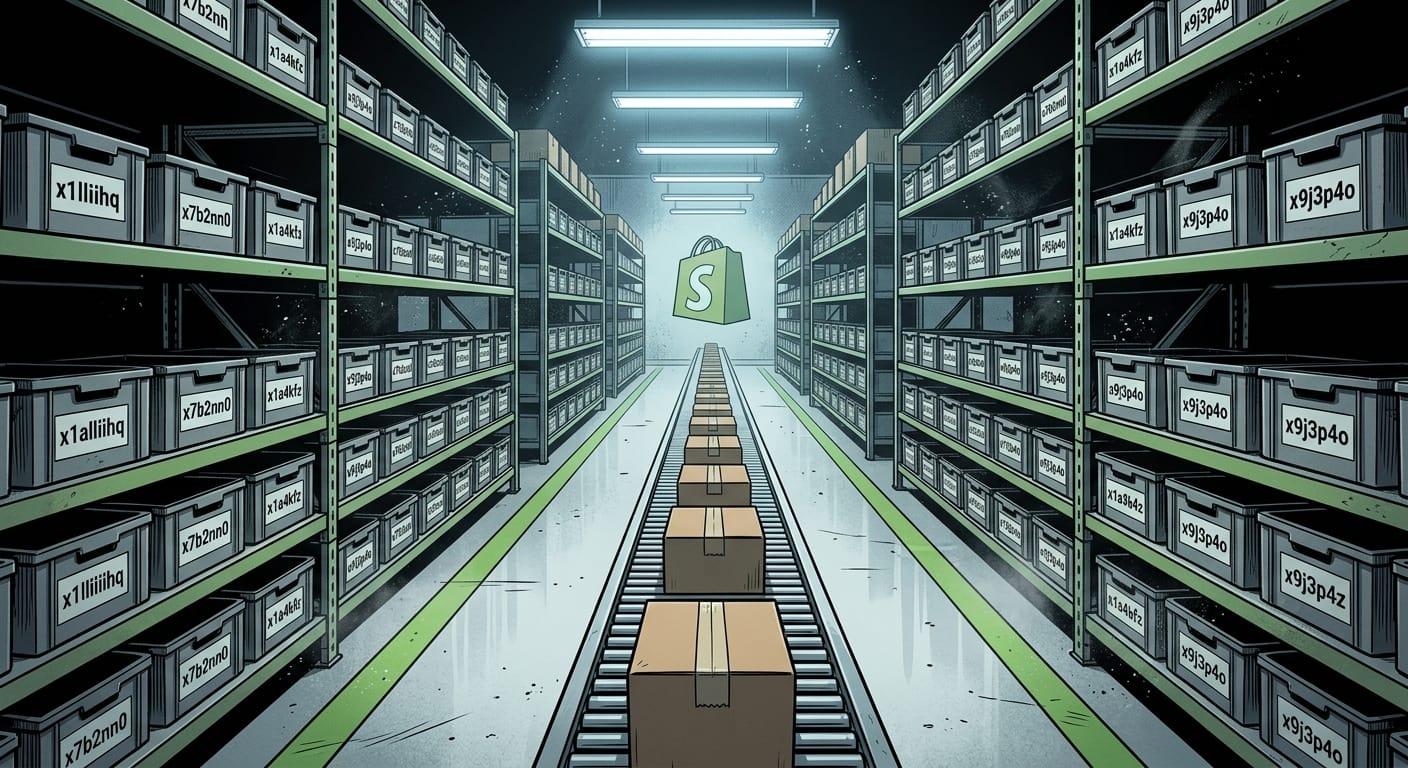
The successors already exist, and they are not syntaxes. vanilla-extract moves styling into typed TypeScript objects, checked at build time. No class vocabulary to read, because there is none. The human interface is a typed object graph, and the contract replaced the naming convention rather than hiding behind it. StyleX goes further: it compiles to hashed class names like x1lliihq. Nobody authors those. Nobody memorizes them. They exist for the compiler to emit and the browser to consume, and no human was ever meant to look.
That is a real drop of the human-legible layer. Not a repackaging. Which brings me to the exhibit everybody reaches for.
But what about shadcdn?
shadcn is not proof of this shift, and the objection is good enough that it deserves an answer instead of a dodge. shadcn's components are styled with Tailwind classes. What shadcn rejected was the npm package model (install a black box, then fight its abstraction layer), and it won that fight by handing you the source. That is a distribution argument. It proves nothing about syntax.
What it does show is the abstraction coming out. And the Tailwind strings riding along inside the copied component are the part a typed styling layer eventually replaces. shadcn is not the counterexample. It is the transitional artifact.
Wrong Layer, Right Check
React Server Components took runtime CSS-in-JS apart before agents showed up in force. styled-components and Emotion were already losing to build-time static extraction, because you cannot inject styles at runtime on a server that has no browser, and streaming SSR will not wait for you to try. That is a pre-agent story with a pre-agent cause: human-ergonomic formats losing to static compiled output.
The agents are not the origin of this. They are the second force on the same vector, and the second force is the one that takes the human out of the loop entirely. The industry already had a reason to move toward typed, static, opaque output. Agents took the last argument the old formats had — a person needs to read it — and walked out of the room with it. Convergent pressure, from two directions, on the same layer.
Tailwind will likely survive as a token set. Shopify bought the wallpaper, not the wall. What they paid for was a human-facing layer at the exact moment the humans stopped looking, and the thing coming to replace it does not look like a better class name.
It does not look like a name at all. It is non-readable. it looks like this: ".xb439nxmzzz"
Shopify bought a rescue that will save nobody
Now the money, because the business story stands on its own.
Tailwind UI was the paid product (a catalog of human-written components), and agents hollowed it out. Assemble the same components on demand and the catalog stops being worth paying for. Revenue fell 80% from its peak. That is not a story about syntax. That is a business whose product was a library of human-written components meeting a customer who can now write components.
Shopify is buying footprint. Tailwind has real presence in its theme ecosystem, and Shopify is racing toward agentic commerce with Sidekick, so owning the styling layer of the web's biggest theme economy is a hedge. Fair enough: a hedge against exactly the force eating the thing being hedged.
Which makes the ending the best part.
Adam Wathan built the framework, wrote the book, sold the components, and then watched agents turn the catalog into a prompt. Then he sold the company to Shopify.
Nobody writing about this deal sounds like they are having fun with it. Look at the two sides of the table. Shopify is buying a dying layer as insurance against the thing that killed it. A working developer built something in public, watched its business model evaporate, and still got a giant to write the check.
"Call it a grift if you want. He did not build a moat. He built a moment, and then he sold the moment" says Claude
Look, bot: I got tons of respect for the guy based on the grift. I don't have to explain myself to some clanker.